A cold entry level: new windows, more insulation, or something simpler?
The owner of a three-storey townhouse said the entry level sat around 14 °C while the floors above were about 23 °C, and a water line had frozen the winter before. Here is what a morning of measurements showed, and why the report said not to pay for windows, insulation or a new furnace yet.
Anonymized: no names, address or identifying details; some details generalized. Images are AI-generated illustrations, not photos of this home. By Jit Makim, InterNACHI Certified Professional Inspector and Level I Infrared Building Surveyor.
Cold downstairs, warm upstairs
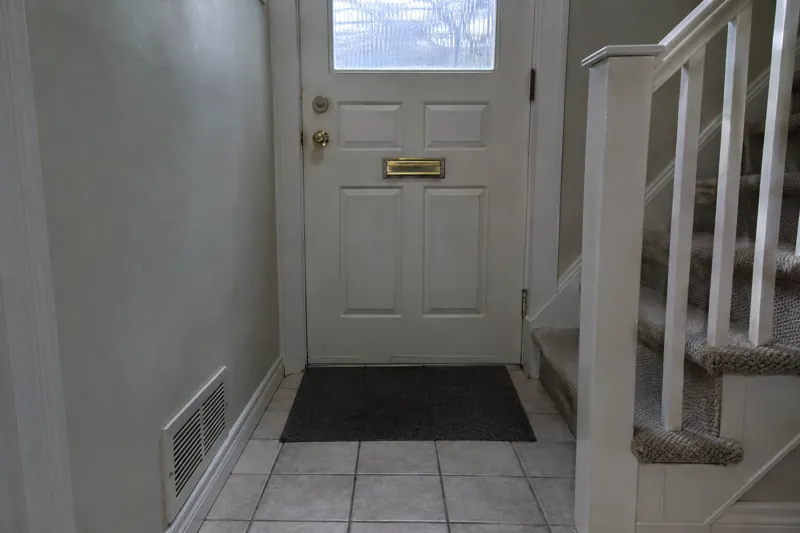
- Home: a three-storey townhouse in Toronto, with the entry level at grade (a den, a powder room and the foyer) and the thermostat one floor up, near the kitchen.
- Reported: the entry level about 14 °C in cold weather against about 23 °C upstairs; the powder-room toilet supply froze the winter before.
- The question behind it: do we need new windows, more insulation, or a new furnace?
One morning, with the heating running normally
This was a wider investigation than our standard booking: about two and a half hours on site, including air measurements at each supply grille. A standard $279 Single-Concern Assessment covers one concern for up to 75 minutes; a full HVAC airflow assessment is for an HVAC contractor.
About two and a half hours on an overcast morning, about 4 °C outside, with no sun on the walls. Thermal imaging of the entry level, air temperature and humidity loggers, and air speed and temperature at every supply grille. The thermostat ran its normal routine and was not changed.
| Measurement | Result |
|---|---|
| Den air when the thermostat, one floor up, reached its 22 °C setpoint | 19.1 °C |
| Air leaving the entry-level supply grilles, about 10 minutes into a heating cycle | 21.2–21.8 °C, only about 1–3.5 °C warmer than the room |
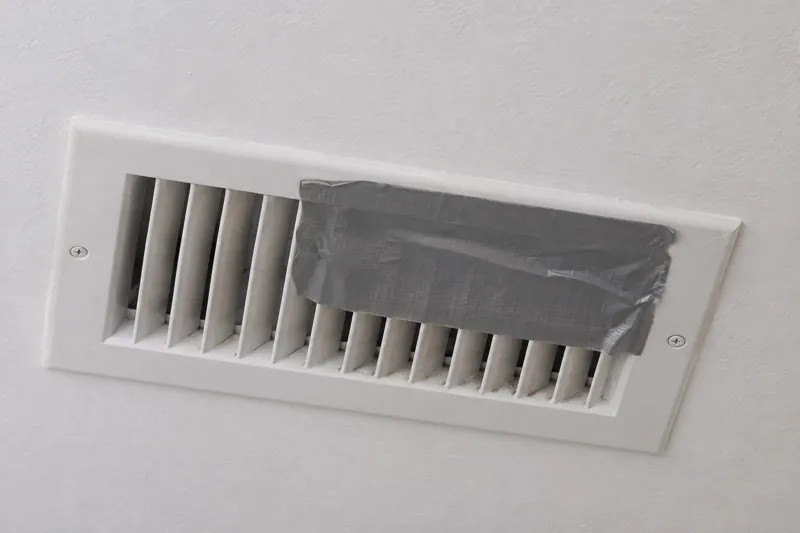
| Den supply grilles | Both in the ceiling; one taped shut by the owner to stop a draft at a desk |
| Cool surface patterns | Front door (mail slot and bottom edge), den windows and the den's wall–floor junction, 2.5–3.5 °C cooler than open wall. Cold air felt at the mail slot. |
| Wall where the frozen pipe runs | About 2 °C cooler than the wall above it |
Two likely contributors, one to check first
| In the report | For this case |
|---|---|
| Observation | The den stayed about 3 °C below the setpoint; the air reaching it was only slightly warm; one supply was closed off; local cool patterns at the door and windows. |
| Possible explanation | Not enough heat reaching the entry level (heat delivery), plus local air leakage at the door and window joints. A thermostat on another floor makes both worse. |
| Confirmed finding | No single cause was confirmed. The readings do not by themselves show a heating malfunction. They are reasons for an HVAC assessment. |
What the report said not to do yet
These findings alone did not support replacing windows, opening finished walls, adding insulation throughout the entry level, or replacing heating equipment. The point of the order below is to find out which of those, if any, is needed before paying for it.
The order the owner was given
- Now, for safety: the door between the garage and the house did not close by itself. It is meant to close and seal to keep vehicle exhaust out. A door installer or general contractor, separate from the cold-floor question.
- Before sustained freezing weather: a licensed plumber to assess and protect the water line that froze, and the other lines in cold spots.
- Step 1 for the cold floor: a licensed HVAC contractor. Check heat delivery to the entry level: airflow and temperature at each supply, the taped grille, the balance between floors.
- Step 2, only if step 1 doesn't explain it: an insulation and air-sealing contractor for the mail slot, door weatherstripping and window-to-wall joints; optionally a Registered Energy Advisor for a blower-door test, which we do not offer.
Each trade got a short checklist to forward, so the owner did not need to explain the whole investigation each time.
In short: in a Toronto townhouse with a cold entry level, measurements showed the den about 3 °C below the setpoint, weak supply air and one supply taped shut, plus local drafts at the door and windows. The report recommended an HVAC heat-delivery check first and air sealing only if needed, and said the evidence did not support new windows, insulation or a new furnace yet.
We do not know what the owner did next or what it cost, so we make no claim about savings. Findings come from one mild morning; a colder night could show more.
Questions about cold rooms
Why check the heating before windows or insulation?
Because a room that does not get enough warm air will be cold however good its windows are. If heat delivery is the problem, it is usually the cheaper fix to look at first. If it is not, the thermal survey has already shown where the drafts and cool surfaces are.
Can a thermal camera prove a wall needs insulation?
No. It shows surface temperature patterns that can be consistent with missing insulation, air leakage or thermal bridging, and helps decide what a contractor should look at. It does not measure R-value or see inside the wall.
Is this an energy audit?
No. It is a focused thermal investigation of a comfort concern. It is not an EnerGuide evaluation or a blower-door test; a Registered Energy Advisor does those.
Is one room or one floor always cold?
Tell us which room, what you notice and when it is worst. We'll confirm whether the weather suits a thermal visit, the scope and your total before you book.